Skip to content
Wichita Falls Foundation

Serving Wichita Falls and nearby areas

Slab Leaks in Wichita Falls, TX

A slab leak in Wichita Falls can soak the clay under one part of the house until it swells or sinks, and a free inspection checks the foundation and tells you if a plumbing test is needed.

Book a free foundation inspection

Tell us what you are seeing. A local specialist calls you back the same business day.

Local to Wichita Falls

We connect property owners in Wichita Falls and nearby areas, including Floral Heights, Faith Village, Tanglewood, Burkburnett, Iowa Park and Electra, with one independent local foundation repair specialist.

  • Pipes as old as the house

    About 11,000 Wichita Falls homes were built in the 1960s and 1970s, and more were built in the 1950s. Many have their original drain lines under the slab.

  • Cast iron wears out

    A Texas foundation engineers group reported that cast iron drain pipe under slabs usually lasts 35 to 50 years, and can fail in as little as 20.

  • Clay that holds a leak

    USDA rates common Wichita Falls soils as slow to let water through. Water from a leak stays in one spot and makes that clay swell.

What it costs

Typical published ranges for Wichita Falls. The contractor's written estimate is the price, and the inspection is free.

WorkTypical range
Foundation inspection and written estimateThrough Wichita Falls Foundation Free
Leak detection $100 to $400
Plumbing pressure test $250 to $500
Slab leak repair, most jobsAbout $2,500 on average $1,000 to $4,000
Tunneling under the house to reach a pipe $900 to $2,000
Rerouting or replacing under-slab plumbing $4,000 to $15,000
Piers, if the slab moved $1,000 to $3,000each

See typical foundation repair prices in Wichita Falls

What a slab leak looks like

Most slab leaks are hidden. The pipe is under the concrete, so you see the effects, not the water. Watch for these:

A water bill that jumps

Your use did not change, but the bill went up and stayed up.

The meter moves with everything off

Turn off every tap, the ice maker and the sprinklers. If the meter still turns, water is going somewhere.

A warm spot on the floor

A leak in a hot water line can warm the tile or carpet above it.

Running water sounds

You hear water moving in a wall or under the floor when nothing is on.

Damp carpet or a musty smell

Moisture comes up through the slab in one spot.

New cracks in floor tile or walls

They show up in one area, often near a bathroom or kitchen.

Sewer smell or slow drains

A broken drain line under the house can leak waste water into the soil.

Water pooling outside near the slab

With no rain and no sprinklers running, the ground stays wet.

Why slab leaks hurt foundations here

Clay that swells when it gets wet. USDA soil surveys list common subsoils around Wichita Falls, like Kamay and Tillman, at 35 to 50 percent clay. Kamay has the swelling type of clay. When a leak keeps one spot wet, that clay swells and pushes the slab up. Over time, flowing water can also carry soil away so part of the slab drops.

Water does not drain away. USDA rates these soils as slow to let water through. Rain soaks in and dries out over weeks. A leak never stops, so the soil under that spot stays wet while the rest of the house dries out in summer. That uneven moisture is what bends a slab.

A lot of older pipe. The 1950s were the busiest building decade in Wichita Falls, and about 11,000 more homes went up in the 1960s and 1970s. Many still have their original drain lines under the slab. A Texas foundation engineers group reported that cast iron drain pipe under slabs usually lasts 35 to 50 years. Soil conditions and harsh drain cleaners can shorten that.

Leaks are often found late. Because the pipe is under concrete, a slow leak can run for months before anyone notices. By then the soil may have moved.

Cosmetic or urgent?

Watch and test soon:

  • A water bill that is a little higher with no clear reason
  • A small musty smell with no other signs

Book an inspection and a plumbing test:

  • The meter moves with everything off
  • A warm or damp spot on the floor
  • New cracks in tile or walls near a bathroom or kitchen
  • Floors that start to slope near plumbing

Call right away:

  • Water coming up through the floor
  • Sewer smell inside the house
  • Cracks that open fast, or doors that suddenly will not close

How it usually gets fixed

The leak comes first. A plumber runs a pressure test or a hydrostatic test on the drain lines. On a hydrostatic test, the drain is plugged, the lines under the slab are filled with water, and the level is watched. If it drops, a camera finds the break. Published guides put leak detection at about $100 to $400 and a plumbing pressure test at about $250 to $500.

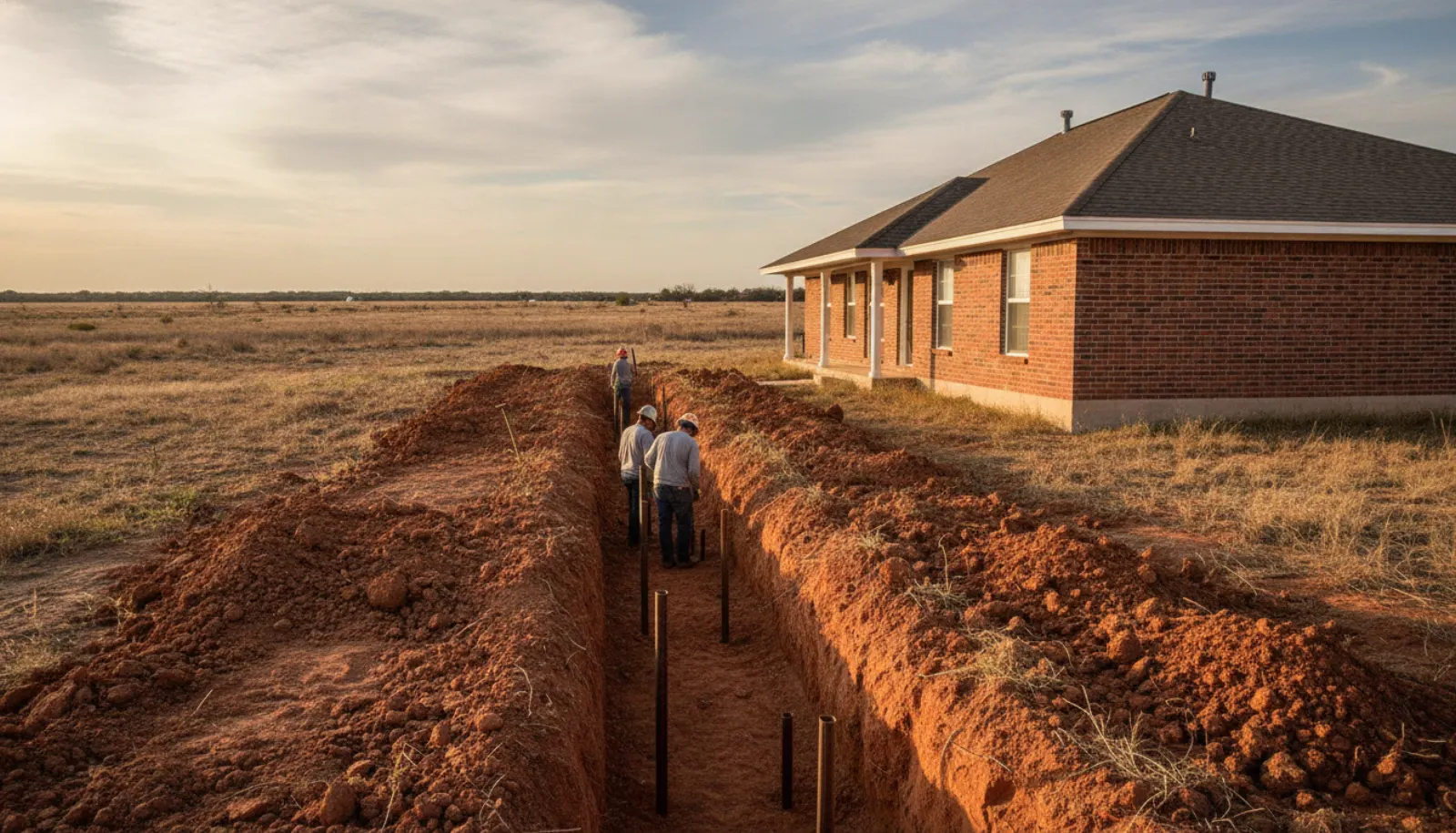
To reach the pipe, the plumber either breaks through the floor or tunnels under the house from outside. Tunneling avoids tearing up floors and runs about $900 to $2,000. Some homes are better off with the line rerouted or replaced, which runs about $4,000 to $15,000. Most slab leak repairs land between $1,000 and $4,000.

Then the foundation. Once the soil is no longer being soaked, the inspector checks floor levels. If the slab moved, piers go under the part that dropped, and the house is lifted and supported. Published guides put piers at about $1,000 to $3,000 each. If the movement is small, the inspector may suggest watching it for a season instead of piers.

These are typical ranges from published cost guides, not quotes. Your foundation price comes in writing after the free inspection.

What to do before the inspection

  1. Do the meter test with everything off and write down what you see.
  2. Pull a few months of water bills.
  3. Mark any warm, damp or cracked spots on the floor with tape.
  4. Note any slow drains or sewer smells.
  5. Call your insurance agent and ask what your policy says about leaks and tear-out.

Call (940) 468-1786 or send the short form. The inspector checks the foundation and tells you whether a plumbing test should come first.

Frequently asked questions

How do I know if I have a slab leak?

Common clues are a water bill that jumps for no reason, a warm spot on the floor, the sound of running water when everything is off, damp carpet or a musty smell, and new cracks in the floor or walls. Turn off every tap and watch the water meter. If it still moves, something is leaking.

Can a slab leak really move my foundation?

Yes. Clay soil swells when it gets wet. A leak that soaks one spot for months can push that part of the slab up, or wash soil away so it drops. Either way, the house moves unevenly.

Should I fix the leak or the foundation first?

The leak. Lifting a house while water is still soaking the soil under it means the soil keeps moving. Most crews want the plumbing tested and fixed before they set piers.

What is a hydrostatic test?

A plumber plugs the drain line, fills the pipes under the slab with water and watches the level. If it drops, there is a leak. If it fails, a camera goes down the pipe to find the spot.

Does insurance cover a slab leak?

It depends on your policy. Some policies cover the cost to tear out and reach a sudden leak but not the pipe itself, and damage from slow leaks or normal soil movement is often excluded. Read your policy and call your agent before you file.

Do I need a plumber or a foundation company?

Often both. The plumber finds and fixes the leak. The foundation inspector checks whether the slab moved and needs support. The free inspection tells you if the foundation side is needed at all.

(940) 468-1786 Free inspection