Skip to content
Wichita Falls Foundation

Serving Wichita Falls and nearby areas

Soil Pulling Away From Foundation in Wichita Falls, TX

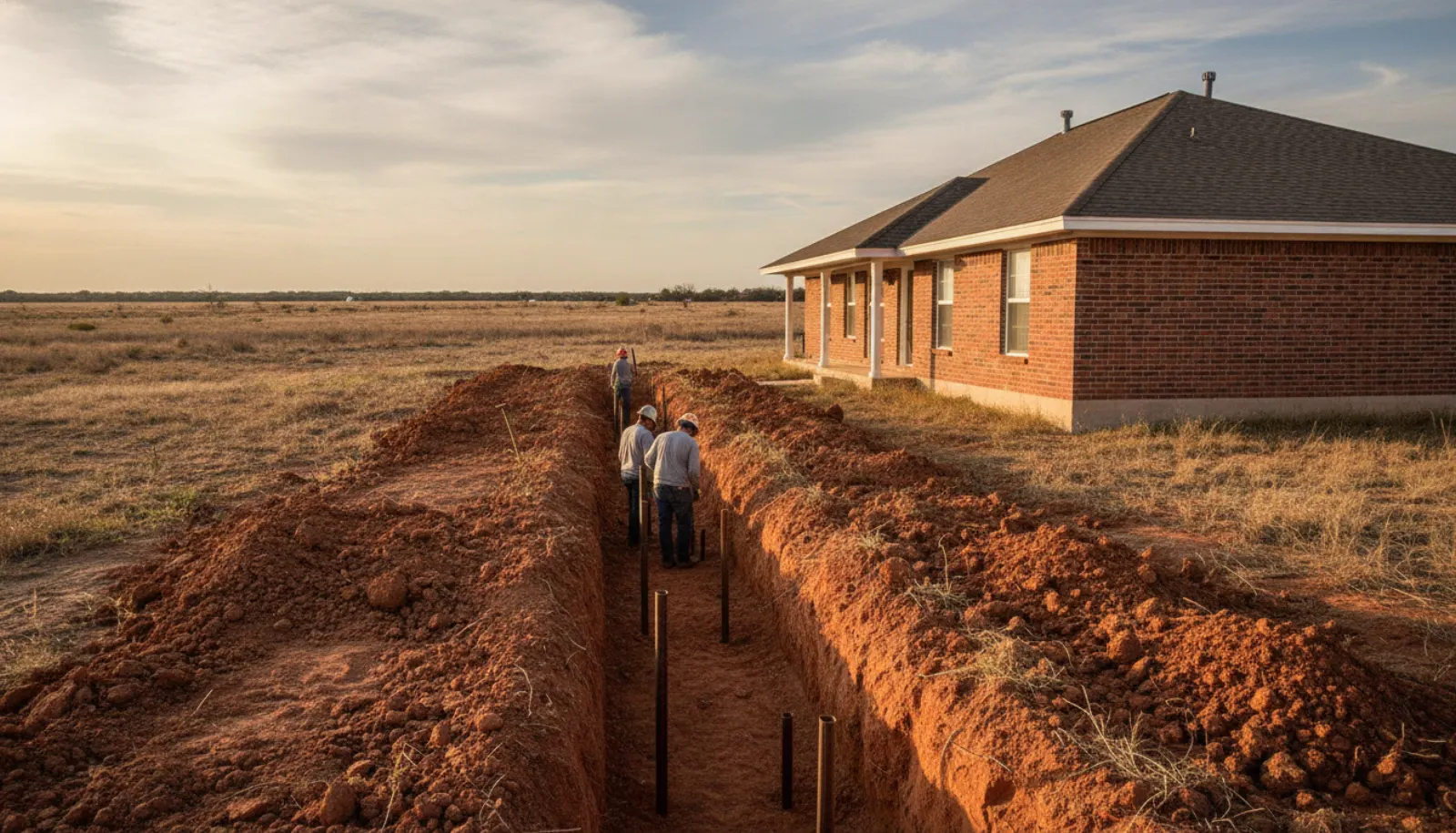
Soil pulling away from the foundation in Wichita Falls means the clay around your house is drying and shrinking, and a free inspection checks whether the house has started to move with it.

Book a free foundation inspection

Tell us what you are seeing. A local specialist calls you back the same business day.

Local to Wichita Falls

We connect property owners in Wichita Falls and nearby areas, including Floral Heights, Faith Village, Tanglewood, Burkburnett, Iowa Park and Electra, with one independent local foundation repair specialist.

  • The gap is the clay shrinking

    USDA says Tillman soil, common around Wichita Falls, forms cracks that can run more than 4 feet deep when it dries out.

  • Foundation watering has a carve-out

    In the Stage 4 drought of 2013, Wichita Falls banned outdoor watering but still let homeowners water a foundation with a soaker hose, 8 p.m. to midnight on their watering day.

  • Soaker hoses in Stage 1

    When Wichita Falls went into a Stage 1 drought watch in October 2024, hand-held hoses, soaker hoses and drip lines were exempt from the watering schedule.

What it costs

Typical published ranges for Wichita Falls. The contractor's written estimate is the price, and the inspection is free.

WorkTypical range
Foundation inspection and written estimateThrough Wichita Falls Foundation Free
Regrading around the whole foundation $1,000 to $3,000
Buried downspout drain $150 to $350per downspout
Piers, if part of the house already dropped $1,000 to $3,000each

See typical foundation repair prices in Wichita Falls

What you will notice

This one is easy to spot from the yard, usually in July or August:

A dark gap along the slab

The dirt has pulled back, leaving a crack between the soil and the concrete.

You can see more slab than before

A strip of bare concrete shows where the soil used to sit.

Deep cracks in the yard

The ground near the house splits into a pattern of open cracks.

The gap is worse on one side

Often the sunny side, or the side near a big tree.

Flower beds sink

Mulch and soil drop away from the wall.

The gap closes after rain

A good soaking swells the clay back up against the slab, and the gap disappears.

Why it happens here

The clay shrinks hard when it dries. USDA soil surveys list common subsoils around Wichita Falls, like Tillman and Kamay, at 35 to 50 percent clay. Kamay has the swelling type of clay. When wet, it pushes outward. When dry, it pulls back. USDA notes that Tillman soil can crack more than 4 feet deep in a dry spell. The gap you see at the slab is the top of that shrinking.

Summers are long, hot and dry. Wichita Falls averages about 28 days a year at 100 degrees or more. In 2011 it hit 100 degrees on 100 days, a Texas record. Heat and wind dry the soil right along the edge of the house first, while the soil under the middle of the slab stays damper.

Droughts are part of life here. From 2011 to 2015 the area was in a drought so deep the city's lakes dropped to just under 19 percent. In October 2024 the city went back into a Stage 1 drought watch. Each dry stretch pulls moisture out of the clay around homes.

Then the rain swings back. In 2015, right after the drought, the city got 50.5 inches of rain. Clay that has been shrinking for months can swell fast. That back-and-forth is what moves foundations.

Why the gap matters

The gap itself is not damage. What matters is what the dry soil is doing under the edge of the house. When the clay under one corner shrinks, that corner loses some support. When the middle stays damp and the edges dry out, the edges can drop while the center stays high.

The gap also lets the next storm pour straight down along the slab. Water that runs into those cracks can soak the clay deep and fast, and the swelling can push that part of the house up.

Not urgent yet:

  • A gap that shows up in the hottest weeks and closes after rain
  • No cracks, sticking doors or sloping floors inside

Worth an inspection soon:

  • A gap that gets wider every summer
  • A gap plus new cracks inside or in the brick
  • Doors on that side that start to stick
  • A corner of the slab that looks lower than the others

What usually helps

Even moisture. Many Wichita Falls homeowners lay a soaker hose a short way out from the slab and run it slow during long dry spells. The goal is soil that stays about the same all the way around the house, not soaked. The city has allowed soaker hose watering of foundations even in strict drought stages, but the rules change with each stage, so check the current one first.

Better grading. Soil that slopes away from the house sheds rain instead of letting it run down into the gap. Published guides put regrading around a whole foundation at about $1,000 to $3,000.

Downspouts that carry water away. A buried drain line moves roof water away from the slab. One guide puts that at about $150 to $350 per downspout.

Repair if the house already moved. If the inspection shows a corner has dropped, the usual fix is piers under that part of the house. Published guides put piers at about $1,000 to $3,000 each.

These are typical ranges from published cost guides, not quotes. Your price comes in writing after the free inspection.

What to do before the inspection

  1. Take photos of the gap on each side of the house, with a ruler in it.
  2. Note which side is worst and whether a tree or the afternoon sun is on that side.
  3. Check inside for new cracks or sticking doors on that side.
  4. Look at where each downspout drains.
  5. Check the city's current drought stage before you start watering.

Call (940) 468-1786 or send the short form to book a free inspection. The inspector checks floor levels to see if the dry soil has already moved the house.

Frequently asked questions

Is a gap between the soil and my slab normal?

In a hot, dry Wichita Falls summer it is common, because the clay shrinks as it dries. It is not damage by itself. It is a sign the soil under the edge of the house is drying too, and that is what can make a corner drop.

Should I fill the gap with dirt?

Filling a small gap with soil and sloping it away from the house is fine. Do not fill it with sand or gravel, which can funnel rain straight down against the slab. Fixing the soil moisture matters more than the gap.

Should I water my foundation?

Many Wichita Falls homeowners do in long dry spells. A soaker hose laid a little way out from the slab, run slow and steady, keeps the soil from drying out unevenly. Do not flood it, and do not spray the slab. Check the city's current drought stage first.

Is watering my foundation allowed during water restrictions?

The city has allowed it even in strict stages. In the 2013 Stage 4 drought, foundations could still be watered with a soaker hose from 8 p.m. to midnight on your watering day. Rules change with each stage, so check the current one before you start.

How do I know if the house has already moved?

Look inside. New cracks over doors, doors that stick, or a floor that slopes toward the side with the biggest gap all point to movement. A free inspection with floor level readings tells you for sure.

Can trees cause the soil to pull away?

Yes. A big tree near the house pulls a lot of water out of the soil in summer. The gap is often widest on the side of the house nearest the tree.

(940) 468-1786 Free inspection